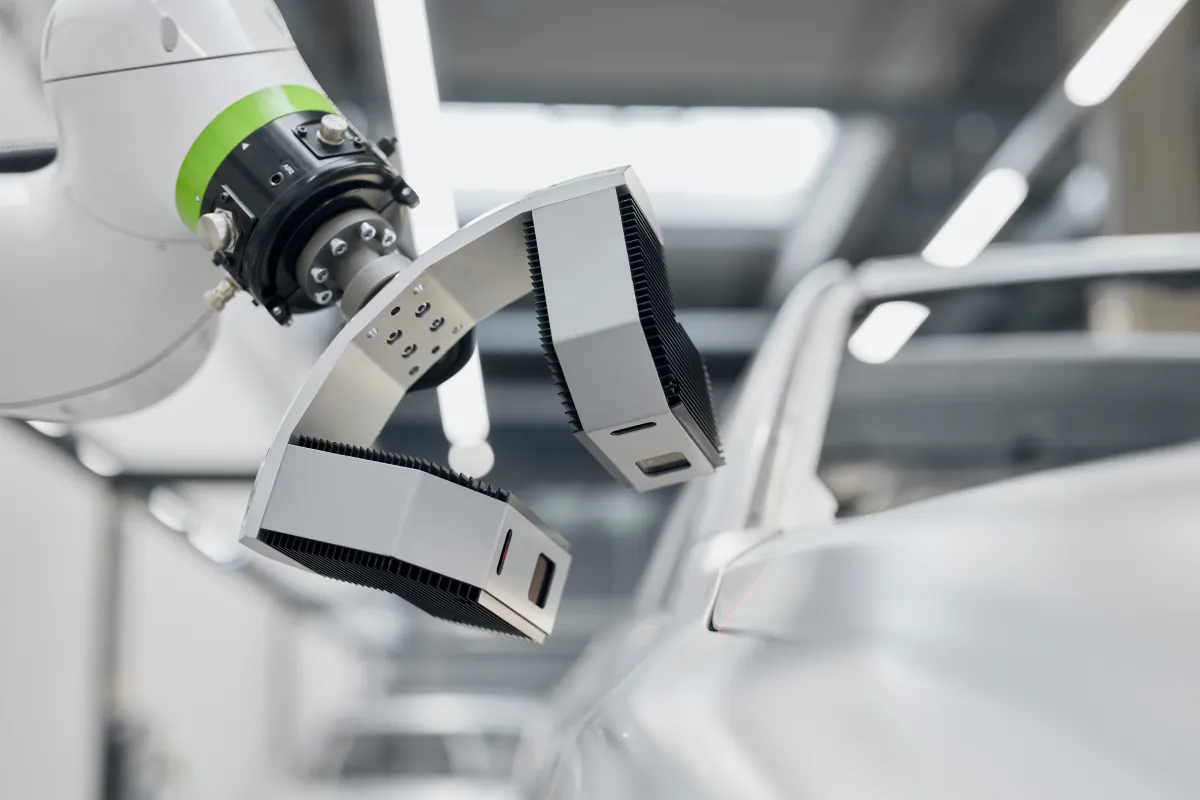
AICell gap & flush
100% Inline measurement of gap and flush - From body shop to final assembly.
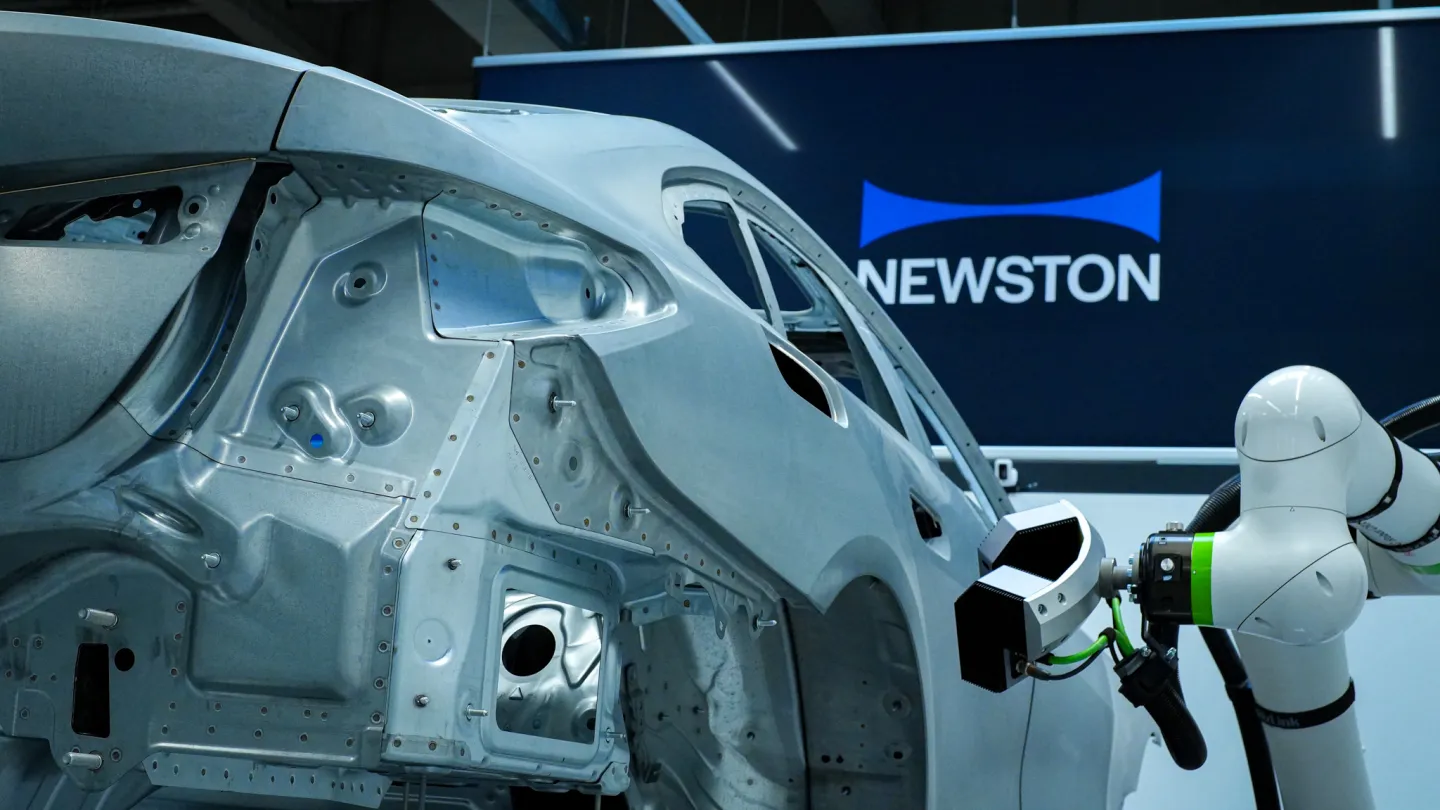
100% INLINE MEASUREMENT OF GAP AND FLUSH FROM BODY SHOP TO FINAL ASSEMBLY
- Realization of the Smart Factory through closed control loops across all trades, from body construction to painting to final assembly
- Quality improvement through identification of process influences at the point of origin
- Reliable basis for corrective measures and avoidance of reworking
- Quality & productivity improvement in the production process
- High-precision measurement of gap and flush with the AIMax twin sensor family, even on non-cooperative and transparent surfaces
For many customers, gap dimensions and flushness are telltale signs of quality long before they even consider technical specifications: Does the door close properly or get stuck? Is the trim piece flush with the surface or protruding? Does the joint run smoothly or not? What matters in terms of first impressions can have serious consequences behind the scenes: If components aren’t flush, water can seep in, air resistance increases and the vehicle’s interior becomes significantly noisier.
Our solution: The AICell gap & flush measures these transitions fully automatically throughout the entire process chain - in body-in-white production, in the paint shop and in final assembly. It reliably captures a wide variety of components, materials and surfaces, including glass, rubber, chrome and painted surfaces.
This results in a large number of gap and flush measurements per vehicle, performed fully automatically and within the cycle time. This is true even where traditional sensors reach their limits: On reflective, transparent, or particularly dark surfaces. The AICell gap & flush thus covers the entire spectrum of what is found in a modern vehicle. In practice, the AICell gap & flush inspects door gaps, tailgate transitions, hoods, window mounts, and trim strips - precisely the areas where build quality can make all the difference.
The real added value lies in the integration into the production line. If deviations become visible as early as the body-in-white stage, they can be corrected there instead of accumulating as rework during final assembly. This makes process influences visible, enables closed-loop control, and significantly reduces time-consuming rework.
The customer benefit: higher quality, increased throughput, and less rework.